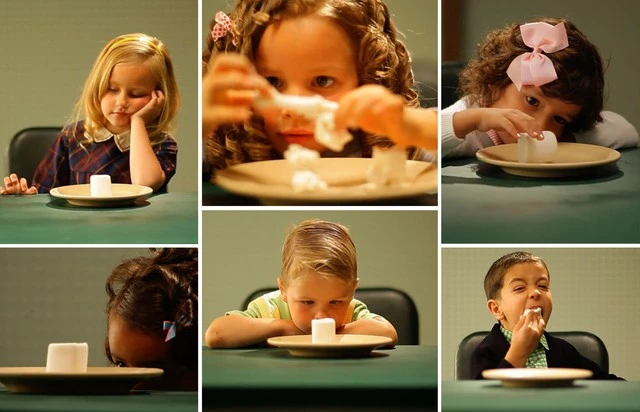
La promiscuidad, entonces, es la antítesis de la verdadera gratificación: entorpece la mente y destruye el control deliberado de las facultades mentales sobre el cuerpo, seduciendo a la gente desde una edad temprana que el camino a la satisfacción es una vida sin restricción. Esto, por supuesto, como una neurona sobreexcitada, conduce a la desensibilización: cuanto más y más satisfaces tus fetiches sexuales, menos y menos placer obtienes de ellos. Te vuelves esclavo de tus pasiones y, lo que es peor, no obtendrás ningún disfrute verdadero y duradero de ellas.
Estamos viviendo en esos tiempos de alabada promiscuidad y dónde reina una cultura de gratificación inmediata: y podemos ver los efectos corrosivos que está teniendo en todas las esferas de la vida, desde las políticas públicas hasta las estructuras familiares en los hogares. Hoy más que nunca, nuestros hijos necesitan saber que la gratificación aplazada es el mejor camino a mayores y mejores placeres en esta vida.
Maitreya
El nombre Maitreya deriva del sánscrito (मैत्री) maitrī, «amistad» (también compasión o benevolencia),[4] que a su vez deriva del sustantivo mitra «amigo». La forma en pali Metteyya se menciona en el Cakkavatti-Sīhanāda Sutta (Digha Nikaya 26) del Canon Pāli, y también en el capítulo 28 del Buddhavamsa.[5][6] La mayoría de los sermones de Buda se presentan como si hubieran sido presentados en respuesta a una pregunta, o en algún otro contexto apropiado, pero este sutta tiene un principio y un final en los que Buda habla a los monjes sobre algo totalmente diferente. Esto lleva al académico Richard Gombrich a concluir que, o bien todo el sutta es apócrifo, o bien que, como mínimo, ha sido manipulado.[7]
En el arte greco-budista de Gandhara, en los primeros siglos de la era cristiana en el norte de la India, Maitreya era la figura más popular en ser representada, junto con el Buda Gautama (a menudo llamado Śākyamuni o “sabio de los Sakia“). En la China de los siglos IV a VI, “los artesanos budistas utilizaban los nombres de Shakyamuni y Maitreya indistintamente… indicando tanto que la distinción entre ambos no se había trazado todavía como que sus respectivas iconografías no se habían establecido con firmeza.”[8] Un ejemplo es la escultura de piedra encontrada en el alijo de Qingzhou dedicada a Maitreya en el año 529 d. de C., según consta en la inscripción (actualmente en el Museo de Qingzhou, Shandong). La creencia religiosa en Maitreya parece haberse desarrollado en la misma época que la de Amitābha, ya en el siglo III d. de C.[9]
- Monier-Williams, Monier (1899). «Maitrī» (pdf). Sanskrit-English Dictionary (en inglés). Oxford. p. 834. Consultado el 22 de septiembre de 2011. en Cologne Digital Sanskrit Dictionaries Archivado el 25 de febrero de 2009 en Wayback Machine. de la Universidad de Colonia, Alemania.
- ↑ Horner (1975), The minor anthologies of the Pali canon, p. 97. Regarding Metteyya, Bv XXVII, 19: “I [Gautama Buddha] at the present time am the Self-Awakened One, and there will be Metteyya….”
- ↑ Buddha Dharma Education Association (2014). «Suttanta Pitaka: Khuddaka Nikāya: 14.Buddhavamsa-History of the Buddhas». Guide to Tipiṭaka. Tullera, NSW, Australia: Buddha Dharma Education Association. Consultado el 21 de diciembre de 2014.
- ↑ Richard Gombrich, Theravada Buddhism: A Social History from Ancient Benares to Modern Colombo. Routledge and Kegan Paul, 1988, pages 83–85.
- ↑ Angela Falco Howard et al., Chinese Sculpture, Yale University Press, 2006, p. 228
- ↑ 中國早期的彌勒信仰 (en chino), TW: TT034, archivado desde el original el 30 de diciembre de 2013.
The name Maitreya is derived from the Sanskrit word maitrī “friendship”, which is in turn derived from the noun mitra “friend”. The Pali form Metteyya is mentioned in the Cakkavatti-Sīhanāda Sutta (Digha Nikaya 26) of the Pāli Canon, and also in chapter 28 of the Buddhavamsa.[2][3] Most of the Buddha’s sermons are presented as having been presented in answer to a question, or in some other appropriate context, but this sutta has a beginning and ending in which the Buddha is talking to monks about something totally different. This leads scholar Richard Gombrich to conclude that either the whole sutta is apocryphal or that it has at least been tampered with.[5]
In the Greco-Buddhist art of Gandhara, in the first centuries CE in northern India, Maitreya was the most popular figure to be represented along with Gautama Buddha (often called Śākyamuni “sage of the Shakya“). In 4th to 6th-century China, “Buddhist artisans used the names Shakyamuni and Maitreya interchangeably… indicating both that the distinction between the two had not yet been drawn and that their respective iconographies had not yet been firmly set”.[6] An example is the stone sculpture found in the Qingzhou cache dedicated to Maitreya in 529 CE as recorded in the inscription (currently in the Qingzhou Museum, Shandong). The religious belief of Maitreya apparently developed around the same time as that of Amitābha, as early as the 3rd century CE.[7]
- Horner (1975), The minor anthologies of the Pali canon, p. 97. Regarding Metteyya, Bv XXVII, 19: “I [Gautama Buddha] at the present time am the Self-Awakened One, and there will be Metteyya….”
- ^ Jump up to:a b Buddha Dharma Education Association (2014). “Suttanta Pitaka: Khuddaka Nikāya: 14.Buddhavamsa-History of the Buddhas”. Guide to Tipiṭaka. Tullera, NSW, Australia: Buddha Dharma Education Association. Retrieved 2014-12-21.
- ^ “Maitreya | Buddhism | Britannica”. . Retrieved 2022-04-16.
- ^ Richard Gombrich, Theravada Buddhism: A Social History from Ancient Benares to Modern Colombo. Routledge and Kegan Paul, 1988, pages 83–85.
- ^ Angela Falco Howard et al., Chinese Sculpture, Yale University Press, 2006, p. 228
- ^ 中國早期的彌勒信仰 (PDF) (in Chinese), TW: TT034, archived from the original (PDF) on 2013-12-30
John Edgar Hoover (Washington D. C., 1 de enero de 1895–2 de mayo de 1972) fue el primer director de la Oficina Federal de Investigación de los Estados Unidos, más conocida como FBI. READ masonry islam
Crean un nuevo método para fabricar combustible de hidrógeno solo con aire
Un equipo de científicos canadienses ha desarrollado un electrolizador capaz de absorber el agua del aire y dividirla en sus dos componentes: hidrógeno, que se puede usar de combustible, y oxígeno, que es liberado a la atmósfera.
ojalá. (Del ár. hisp. law šá lláh, si Dios quiere). Si Dios quisiera?
Yakhchal
Las antiguas poblaciones de Persia dominaron el control de temperatura durante el verano en el desierto a partir de los años 440 antes de Cristo. Sin embargo, las primeras referencias históricas del uso de Yakhchals para producir hielo se remontan al siglo XVII.[1] Un viajero en la ciudad de Ispahan los describe de la siguiente manera:
Había multitud de Yakhchals en Ispahan; algunos de ellos eran de uso privado. Sin embargo, los pobres también podían usar el Yakhchal para enfriar agua. Sorbetes y frutas eran conservados con hielo en todas las tiendas. Grandes trozos de hielo eran llevados por burros y vendidos en toda la provincia. En Ispahan, la gente podía comprar hielo en el bazar o directamente del edificio del Yakhchal.
(Ernest Holster, 1870).[2]
Al cabo del tiempo, por múltiples razones, los yakhchales dejaron de utilizarse progresivamente hasta caer en desuso. La principal razón de su declive fueron los refrigeradores modernos, que permitían producir hielo de manera individualizada y con menos esfuerzo. Además, el hielo industrial era más limpio que el de los yakhchales, que solía estar mezclado con polvo y tierra proveniente del estanque. Por último, la fuerte erosión provocada por el viento (sobre todo en zonas desérticas) hacía que los yakhchales requirieran un mantenimiento constante.[3]
Las partes sobre la tierra del Yakhchal estaban conectadas a los qanath (un sistema de canalizaciones de agua en el desierto) y también recibían agua a partir de captadores de viento. Durante la estación fría el agua se destinaba hacia el estanque, el cual se helaba durante la noche. Al amanecer, el hielo era cortado en trozos y llevado al almacén de hielo. Como el almacén de hielo tenía forma cónica, el aire atrapado en su interior se calentaba bajo la cúpula, mientras que las capas inferiores permanecían frescas.[3] En ocasiones, los Yakhchal presentaban sistemas adicionales para mejorar la producción de hielo, como un pozo bajo la estructura para evacuar el exceso de agua de deshielo. También podían poseer varios canales de agua que enfriaban las piedras del canal del cual se extraía el hielo, así como el perímetro exterior de la bóveda.
- Mokhlesi, M. (2012). «Traditional Refrigerators, the Forgotten Masterpieces». The Second Congress on Architecture and Urban Planning History 2: 685-98.
- ↑ Holster, Ernest (1870). Iran in hundred and thirteen years ago (en inglés). p. 47.
- ↑ Saltar a:a b Hosseini, Bahareh; Namazian, Ali (2012). «An overview of Iranian ice repositories, an example of traditional indigenous architecture». METU JFA 29 (2): 223-234. doi:10.4305/METU.JFA.2012.2.10.
Scientists have worked out how to generate electricity from thin air
Copyright Federico Beccari By Rachel Graham • 18/02/2020
Scientists have worked out a way to generate energy from nothing but the air around us, and not by using wind turbines.
Researchers at the University of Massachusetts Amherst have developed a device that uses a natural protein to create electricity from humidity and moisture present in the air across the globe. They say the new technology could have change the face of renewable energy with the potential to put the brakes on climate change by burning fewer fossil fuels.
The ‘Air-gen’ or air-powered generator contains tiny electrically conductive wires called protein nanowire, which are produced by microbes. The generator connects electrodes to the nanowires meaning electricity is generated from water vapour in the atmosphere.
“We are literally making electricity out of thin air,” says electrical engineer Jun Yao, who was behind the invention alongside microbiologist Derek Lovley. “The Air-gen generates clean energy 24/7.”
.
This invention is about advanced version of recharging battery (6) for electric car. Air resistance pressure generated when travelling a car makes the blade (2, 2-1) rotate, and this rotary force is converted into electrical energy by power generator (5) and the battery (6). The rotary force is maximized by increase in air speed through louver-type cylinder (12), interaction between electrical energy converted by coil (14) inside the cylinder and magnet (13) put on the blades (2, 2-1).
Fergie Olver is a Canadian former game show host and sportscaster. He is best known for co-hosting the 1980s children’s game show Just Like Mom with his wife Catherine Swing, and his work as a broadcaster and dugout reporter for the Toronto Blue Jays. Olver’s daughter, Carrie Olver, is known for her work on shopping channels and The Weather Network.
Islam
En Bizancio, el símbolo se asoció con su diosa patrona Artemisa y su versión romanizada Diana con la griega jónica o caria Hécate, y se utiliza como una representación de las diosas de la Luna en la época grecorromana. Las representaciones antiguas del símbolo siempre muestran la media luna con cuernos o sin ellos apuntando hacia arriba y con la estrella (a menudo con ocho rayos) colocada dentro de la media luna usadas como protección y buena fortuna. Este arreglo también se encuentra en las monedas del Imperio sasánida, luego de la conquista del Imperio bizantino. Por parte del Imperio otomano mucho de la cultura bizantina grecorromana llegó a fusionarse con las culturales de su invasor y conquistador de origen en Asia Central. Probablemente con el tiempo el símbolo fue adoptado como una forma de manifestación de identidad étnico-religiosa por todo el imperio siendo o no de origen turco, eso provocó que muchos de los países que se formaron luego de la disolución del imperio usaran el símbolo para representar su religión. Tanto así que se volvió un símbolo del Islam mundialmente conocido, tanto que sobrepasó las fronteras del antiguo imperio y llegó a otros países musulmanes fuera del imperio
REVIEWING the so called The Lost Books of the Bible and the Forgotten Books of Eden
The Lost Books of the Bible and the Forgotten Books of Eden (1926) is a collection of 17th-century and 18th-century English translations of some Old Testament Pseudepigrapha and New Testament apocrypha, some of which were assembled in the 1820s, and then republished with the current title in 1926.
- The Conflict of Adam and Eve with Satan (The First and Second Book of Adam and Eve) [it should not be confused with the life of adam and eve book]
- The Secrets of Enoch (also known as the Slavonic Enoch or Second Enoch). The Second Book of Enoch (abbreviated as 2 Enoch and also known as Slavonic Enoch, Slavic Enoch or Secrets of Enoch)
- The Psalms of Solomon
- The Odes of Solomon The Odes of Solomon are a collection of 42 odes
- The Letter of Aristeas
- The Letter of Aristeas to Philocrates is a Hellenistic work of the 3rd or early 2nd century BC, considered by some Biblical scholars to be pseudepigraphical.[1] The letter is the earliest text to mention the Library of Alexandria.[2]
- Beginning of the Letter of Aristeas to Philocrates. Biblioteca Apostolica Vaticana, 11th century.
- Josephus,[3] who paraphrases about two-fifths of the letter, ascribes it to Aristeas of Marmora and to have been written to a certain Philocrates. The letter describes the Greek translation of the Hebrew Bible by seventy-two interpreters sent into Egypt from Jerusalem at the request of the librarian of Alexandria, resulting in the Septuagint translation.
- The Fourth Book of Maccabees
- The Story of Ahikar The Story of Aḥiqar, also known as the Words of Aḥiqar, is a story first attested in Imperial Aramaic from the 5th century BCE on papyri from Elephantine, Egypt, that circulated widely in the Middle and the Near East.[1][2][3] It has been characterised as “one of the earliest ‘international books’ of world literature”.[4]
- Testaments of the Twelve Patriarchs
The Testaments of the Twelve Patriarchs is a constituent of the apocryphal scriptures connected with the Bible. It is believed to be a pseudepigraphical work of the dying commands of the twelve sons of Jacob.
- I Thess. ii. 16 is a quotation of Test. Patr., Levi, 6:10-11;
- Rom. 12:19 is taken from Gad, 6:7;
- Rom. 12:21 is taken from Benjamin, 4:3;
- II Cor. 7:10 is a quote from Gad, 5:7;
- Ephes. 5:6 appeared first in Naphtali, 3:1.[26]
- Later scholarship has highly debated this issue.
- Harris, Stephen L., Understanding the Bible. (Palo Alto: Mayfield) 1985; André Pelletier, SJ, La Lettre d’Aristée à Philocrate (Paris) 1962.
- ^ The Cambridge Companion to the City in Literature, edited by Kevin R. McNamara, p.36
- ^ Antiquities XII:ii passim (Online in Greek and English at York University)
- Christa Müller-Kessler, “Ahiqar,” in Brill’s New Pauly, Antiquity volumes, ed. by Hubert Cancik and Helmuth Schneider, English edition by Christine F. Salazar, Classical Tradition volumes ed. by Manfred Landfester, English Edition by Francis G. Gentry.
- ^ “The Story of Ahikar | Pseudepigrapha”. Encyclopedia Britannica. Retrieved 2021-01-23.
- ^ J. M. Linderberger, Ahiqar (Seventh to Sixth Century B.C.). A New Translation and Introduction, in James H. Charlesworth (1985), The Old Testament Pseudoepigrapha, Garden City, NY: Doubleday & Company Inc., Volume 2, ISBN 0-385-09630-5 (Vol. 1), ISBN 0-385-18813-7 (Vol. 2), p. 480. Quote:”The Aramaic manuscript was discovered by German escavators at Elephantine in 1907. Catalogued by the Königliche Museen zu Berlin as P.13446, most of the manuscript remanins in the museum’s Papyrus Collection. Column vi (P.13446 J) was subsequently returned to Egypt along with a number of other papyri from Elephantine and is now at the Egyptian Museum at Cairo, where it bears the catalogue number 43502. […] The Syriac and the Armenian (which also goes back to a Syr. tradition) are the versions most closely related to the Aramaic.”
- ^ Ioannis M. Konstantakos, “A Passage to Egypt: Aesop, the Priests of Heliopolis and the Riddle of the Year (Vita Aesopi 119–120),” Trends in Classics 3, 2011, pp. 83–112, esp. 84).
1. Books of the Apocrypha:
First and Second Esdras (150-100 BC)
Tobit (200 BC)
Judith (150 BC)
Additions to Esther (140-130 BC)
Wisdom of Solomon (30 BC)
Ecclesiasticus, otherwise known as The Wisdom of Jesus son of Sirach (132 BC)
Baruch (150-50 BC)
Letter of Jeremiah (300-100 BC)
Song of the Three Holy Children, an addition in the Greek version of Daniel 3 (170-160 BC)
Susanna (200-0 BC)
Bel and the Dragon (100 BC)
Additions to Daniel, or the Prayer of Azariah (200-0 BC)
Prayer of Manasseh (100-0 BC)
First Maccabees (110 BC)
Second Maccabees (110-170 BC)
2. Books of the Pseudepigrapha:
Epistle of Barnabas
First (and Second) Epistle of Clement to the Corinthians
The letter of the Smyrnaeans (also known as The Martyrdom of Polycarp)
The Shepherd of Hermas
The Book of Enoch
The Gospel of Judas (130-170 AD)
The Gospel of Judas is a non-canonicalGnostic gospel. The content consists of conversations between Jesus and Judas Iscariot. Given that it includes late 2nd-century theology, it is widely thought to have been composed in the 2nd century (prior to 180 AD) by Gnostic Christians,[1] rather than the historic Judas himself. The only copy of it known to exist is a Coptic language text.
The Gospel of Thomas (140-170 AD)
The Psalms of Solomon
The Odes of Solomon
The Testaments of the Twelve Patriarchs
Second Baruch
The Books of Adam and Eve
The Acts of Phillip
The Apocalypse of Peter
The Gospel of the Nativity of Mary
The Gospel of Nicodemus
El Evangelio de Nicodemo o Hechos de Pilato (Acta Pilati; Πράξεις Πιλάτου)[1] es un evangelio apócrifo que afirma haber sido derivado de una obra hebrea original escrita por Nicodemo, quien aparece en el Evangelio de Juan como un asociado de Jesús. El título Evangelio de Nicodemo es de origen medieval.[2] Las fechas de sus secciones acumuladas son inciertas.
La sección sobre Pilato es un texto más antiguo que se encuentra en el griego Hechos de Pedro y Pablo y, según la versión sobreviviente,[3] es un documento oficial de Poncio Pilato (o compuesto a partir de informes en el praetorium en Jerusalén) que informa los eventos en Judea al emperador Tiberius, y se refiere a la crucifixión de Jesús, así como a sus milagros.[4] Contiene el nombre de personajes que han trascendido en la tradición del cristianismo: Dimas, Gestas, Longinos o la Verónica. Escrito hacia 130 d. C. y conservado en el Papiro de Akhmim (siglos VIII-IX, en griego); en él, se relata el episodio de la Catabasis o descenso de Cristo a los infiernos.[5]
Según los Hechos de Pilatos, la versión original se conservó en el praetorium de Jerusalén.[3] Se debate la cuestión del idioma original. Más allá del griego, las versiones en latín, siríaco, copto, georgiano, eslavo y otros idiomas han sobrevivido.
- «The Gospel of Nicodemus (The Acts of Pilate) A», The Apocryphal Gospels: Texts and Translations, Oxford University Press, november 2021, p. 419, ISBN 978-0-19-973210-4, (requiere registro).
- ↑ Saltar a:a b Reid, George (1913). «Acta Pilati». Catholic Encyclopedia (en inglés). Nueva York: Robert Appleton Company. OCLC 1017058.
- ↑ Saltar a:a b c “El Nuevo Testamento Apócrifo” ISBN 9780198261216 ;Error en la cita: Etiqueta
<ref>no válida; el nombre «the_gospel_of_nicodemus» está definido varias veces con contenidos diferentes - ↑ Saltar a:a b c Westminster John Knox Press (ed.), id = TDW0PeFSvGEC & pg = PA501 «El evangelio de Nicodemo: Los hechos de Pilato y el descenso de Cristo a los infiernos», Apócrifos del Nuevo Testamento: Evangelios y escritos relacionados 1 (Revisado edición), Louisville, KY, pp. 501-502, ISBN 978-0-664-22721-0.
- ↑ Antonio Piñero. Todos los evangelios, EDAF, 2010, ISBN 844142196X p. 387.
The Gospel of the Saviour’s Infancy
The History of Joseph the Carpenter
The Acts of Paul (Including Paul and Thecla)
The Seven Epistles of Ignatius
The Epistle of Polycarp to the Philippians
Non-canonical books referenced in the Bible
The following are mentioned in the Hebrew Bible:
- The Book of Jasher is mentioned in Joshua 10:13 and 2 Samuel 1:18 and also referenced in 2 Timothy 3:8.[1] From the context in the Book of Samuel, it is implied that it was a collection of poetry. Several books have claimed to be this lost text, some of which are discounted as pseudepigrapha. Certain members of the Church of Jesus Christ of Latter-day Saints secured the copyright to a particular English translation of one of these and republished it in 1887 in Salt Lake City.[2]
- The Book of the Wars of the Lord[3] is mentioned in Numbers 21:14. It is speculatively associated with one of the Dead Sea Scrolls, the War of the Sons of Light Against the Sons of Darkness.[citation needed] The Book of the Wars of the Lord is also cited in the Book of Jasher (trans. Moses Samuel c. 1840, ed. J. H. Parry 1887) Chapter 90:48 as being a collaborative record written by Moses, Joshua and the children of Israel.
- The Chronicles of the Kings of Israel and Chronicles of the Kings of Judah are mentioned in the Books of Kings (1 Kings 14:19,29). They are said to tell of events during the reigns of Kings Jeroboam of Israel and Rehoboam of Judah, respectively. The Chronicles of the Kings of Israel is again mentioned in 1 Kings 16:20 regarding King Zimri, and many other times throughout 1 and 2 Kings.
- The Book of Shemaiah the Prophet and Story of the Prophet Iddo (also called Visions of Iddo the Seer or The Annals of the Prophet Iddo) are mentioned in the 2nd Book of Chronicles. (2 Chronicles 9:29, 2 Chronicles 12:15, 2 Chronicles 13:22). This book has been completely lost to history, save for its title.
- The Manner of the Kingdom.[4]
Referenced at 1 Samuel 10:25. - The Acts of Solomon.[5]
Referenced at 1 Kings 11:41. - The Annals of King David.[6]
Referenced at 1 Chronicles 27:24. - The Book of Samuel the Seer. Also called Samuel the Seer or The Acts of Samuel the Seer, which could be the same as 1 & 2 Samuel.[7]
Referenced at 1 Chronicles 29:29. - The Book of Nathan the Prophet. Also called Nathan the Prophet or The Acts of Nathan the Prophet or History of Nathan the Prophet.[7]
Referenced at 1 Chronicles 29:29, and also 2 Chronicles 9:29. - The Book of Gad the Seer.[8]
Referenced at 1 Chronicles 29:29. - The Prophecy of Ahijah,[9] might be a reference to 1 Kings 14:2–18.
Referenced at 2 Chronicles 9:29. - The Book of the Kings of Judah and Israel.[10]
Referenced in 2 Chronicles 16:11, 2 Chronicles 27:7 and 2 Chronicles 32:32. Might be the same as 1 & 2 Kings. - The Book of Jehu,[11] could be a reference to 1 Kings 16:1–7.
Referenced at 2 Chronicles 20:34. - The Story of the Book of Kings.[12]
Referenced at 2 Chronicles 24:27. - The Acts of Uziah. Also called The Book by the prophet Isaiah. Perhaps the same as the Book of Isaiah.[7]
Referenced at 2 Chronicles 26:22. - The Vision of Isaiah.[13]
Referenced at 2 Chronicles 32:32. - The Acts of the Kings of Israel. Also called The Acts and Prayers of Manasseh.[14] May be identical to The Book of the Kings of Israel, above.
Referenced at 2 Chronicles 33:18. - The Sayings of the Seers.[15]
Referenced at 2 Chronicles 33:19. - The Laments for Josiah. Also called Lamentations. This event is recorded in the existing Book of Lamentations.
Referenced at 2 Chronicles 35:25. - The Chronicles of King Ahasuerus.[16]
Referenced at Esther 2:23, Esther 6:1, Esther 10:2, and Nehemiah 12:23.
Mennonite scholar David Ewart has mentioned that Nestle’s Greek New Testament lists some 132 New Testament passages that appear to be verbal allusions to paracanonical books.[19]
Pagan authors quoted or alluded to:[20][21]
- Menander, Thais 218 (1 Corinthians 15:33)
- Epimenides, de Oraculis, (Titus 1–12:13, where Paul introduces Epimenides as “a prophet of the Cretans,” see Epimenides paradox)
- Aratus, Phaenomena 5, (Acts 17:28, where Paul refers to the words of “some of your own poets”)
Non-canonical books quoted or alluded to:[20]
- Book of Enoch (Jude 1:4, 1:6, 1:13, 1:14–15, 2 Peter 2:4; 3:13,[22][23] and John 7:38 [24]).
- Apocryphon of Jannes and Jambres, according to Origen (2 Timothy 3:8 “… as Jannes and Jambres withstood Moses“)
- Epistle to the Laodiceans (Colossians 4:16 “read the epistle from Laodicea”)
- Life of Adam and Eve (2 Corinthians 11:14 “Satan as an angel of light”, 12:2 “Third Heaven”)[25]
- A lost section of the Assumption of Moses (2 Timothy 3:8, Jude 9 “Michael.. body of Moses”)
- Ascension of Isaiah (Hebrews 11:37 “they were sawn in two”)
- Paul’s letter to the Corinthians before 1 Corinthians (1 Corinthians 5:9 “I wrote to you in my letter…”)
- Paul’s letter to the Ephesians before Ephesians (Ephesians 3:3 “As I wrote afore in few words…”)
- An unknown messianic prophecy possibly from a non-canonical source, quoted in Matthew 2:23 that states “…he will be called a Nazorian.” (“ὅτι Ναζωραῖος κληθήσεται”). “Nazorian” is typically rendered as “Nazarene” (“from Nazareth“), as in Acts 24:5, where Christians are referred to as “the sect of the Nazorians/Nazarenes” (“τῶν Ναζωραίων αἱρέσεως”). This is speculated[by whom?] to be a vague allusion to a quote about Samson in Judges 13:5 that uses a similar-sounding word: “the child shall be a Nazirite” (ναζιρ)
- An unknown version of Genesis (possibly a targum, midrash or other commentary), quoted by Paul in 1 Corinthians 15:45, as a reference to Christ’s being “the Last Adam who became a life-giving spirit” (οὕτως καὶ γέγραπται· Ἐγένετο ὁ πρῶτος ἄνθρωπος Ἀδὰμ εἰς ψυχὴν ζῶσαν· ὁ ἔσχατος Ἀδὰμ εἰς πνεῦμα ζῳοποιοῦν.). It has been speculated[by whom?] that Paul is simply paraphrasing Genesis 2:7, but there is no clear indication that this is not a complete quote.
- An unknown text quoted by Paul in 1 Corinthians 2:9, suggested by Origen to be a lost apocryphal book:[26] “But as it is written, ‘No eye has seen, no ear has heard, and no mind has imagined the things that God has prepared for those who love him.” This may also be an allusion to the similar Isaiah 64:4, “For from days of old they have not heard or perceived by ear, nor has the eye seen a God besides You, Who acts in behalf of the one who waits for Him.'”.[27]
- An unknown messianic prophecy, possibly from a non-canonical source, quoted in Luke 24:46, speculated to be a vague allusion to Hosea 6:2:[28] “Thus it is written, and thus it behoved Christ to suffer, and to rise from the dead the third day.”
- An unknown messianic prophecy, possibly from a non-canonical source, quoted in Mark 9:12, speculated[by whom?] to be a vague allusion to Isaiah 53: “and how it is written of the Son of man, that he must suffer many things, and be set at nought.”
NOT EVERYTHING QUOTED IS SCRIPTURE, NIETHER EVERYTHING QUOTED AS SCRIPTURE IS SCRIPTURE. IT DEPENDS ON AUTHOR AND WHAT HE MEANT Bronson C. Keeler The Early Church Fathers Quoted As Scripture Books Which Are Now Called Apocryphal
READ
READ
Sharing is caring
Share
+1
Tweet
Share
Share