
/ˌdʒɛrɪˈmaɪ.ə/;[1]Hebrew: יִרְמְיָהוּ, Modern: Yīrməyahū[jiʁmiˈjahu], Tiberian: Yīrəməyāhū; Greek: Ἰερεμίας, romanized: Ieremíās; meaning “Yah Exalts”
Wells 1990, p. 383. Wells, John C. (1990). Longman Pronunciation Dictionary. Pearson Longman. ISBN 978-1-4058-8117-3.
“Jeremiah”. Encyclopedia Britannica.
Hillers 1993, p. 419. Hillers, Delbert R. (1993). “The Lamentations of Jeremiah”. In Bruce M. Metzger; Michael David Coogan (eds.). The Oxford Companion to the Bible. Oxford University Press. ISBN 978-0-19-974391-9.
Hillers 1972, pp. xix–xxiv. Hillers, Delbert R. (1972). The Anchor Bible. Lamentations.
1 Chronicles, 2 Chronicles, Ezra, Nehemiah = Ezra – 450 B.C. (late date). Koresh of Ezra 1:1 is called “king of Persia”, which title was introduced not by Cyrus the Great but by his grandson and probable namesake Xerxes (486–465 BC).[16]
Roman Ghirshman, Iran (1954), Penguin Books, p 191.
REVIEW JOSEPHUS, ANTIQUITIES, BOOK XI
CORRECTION OR CONFIRMATION OF BIBLICAL POST-EXILIC RECORDS ? C. G. TULAND Chicago, Illinois Josephus and his Sources https://digitalcommons.andrews.edu/cgi/viewcontent.cgi?article=1048&context=auss In Ant., xi. 5.1 Josephus places both Ezra and Nehemiah in the reign of Xerxes, which would fix the activities of these Jewish leaders between the years 486 and 465.
Sanballat in the Elephantine Papyri Lastly, I would point out the mention of Sanballat, the local leader Nehemiah contended with, in Elephantine papyri that place him alive in 407 BC. As described at https://theosophical.wordpress.com/2011/09/07/biblical-archaeology-31-the-elephantine–papyri/: One letter is of particular note. The “Petition to Bagoas” is a letter written by Yedaniah bar-Gemariah on November 25, 407 BC (the 17th year of King Darius) to Bagoas, the Persian governor of Judea, asking for assistance in the rebuilding of a Jewish temple in Elephantine that had been damaged by Egyptian priests in the community. On the reverse side at the very end it mentions another letter that had been sent to the sons of Sanballat, governor of Samaria: “We have also set forth the whole matter in a letter in our name to Delaiah and Shelemiah, the sons of Sanballat, the governor of Samaria. Furthermore, Arsames (the Persian satrap) knew nothing of all that was perpetrated on us. On the twentieth of Marheshwan, the seventeenth year of Darius the King.”
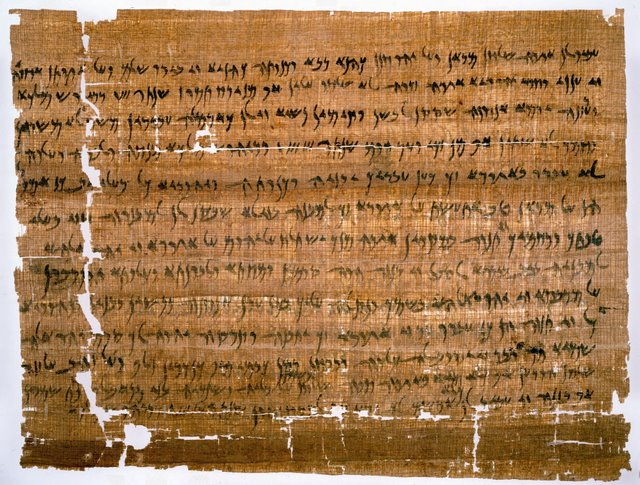
The Elephantine papyri dating to 407 BC that mentions Sanballat I, governor of Samaria while Nehemiah was governor of Judea. Public domain.
Esther = Mordecai – 450 B.C. – 400 B.C. (late date). The Megillat Esther (Book of Esther) became the last of the 24 books of the Tanakh to be fixed by the Sages of the Great Assembly. According to the Talmud, it was a redaction by the Great Assembly of an original text by Mordecai.[14] Shemaryahu Talmon, suggests that “the traditional setting of the book in the days of Xerxes I cannot be wide off the mark.”[17]
Babylonian Talmud: Tractate Baba Bathra 15a
Shemaryahu Talmon, “Wisdom in the Book of Esther”, Vetus Testamentum 13 (1963), p. 453 (at JSTOR, free subscription needed)
According to Jewish tradition the Men of the Great Assembly (Hebrew: כְּנֶסֶת הַגְּדוֹלָה) or Anshei Knesset HaGedolah (אַנְשֵׁי כְּנֶסֶת הַגְּדוֹלָה, “The Men of the Great Assembly”), also known as the Great Synagogue, or Synod, was an assembly of 120 scribes, sages, and prophets, in the period from the end of the Biblical prophets since the early Second Temple period (which started around 516 BCE) to the early Hellenistic period (which began with Alexander’s conquests of 333–332 BCE).
Job = Moses – 1400 B.C.
Psalms = several different authors, mostly David – 1000 – 400 B.C.
Proverbs, Ecclesiastes, Song of Solomon = Solomon – 900 B.C.
Isaiah = Isaiah – 700 B.C.
Jeremiah, Lamentations = Jeremiah – 600 B.C.
Ezekiel = Ezekiel – 550 B.C. (late date). The Book of Ezekiel describes itself as the words of the Ezekiel ben-Buzi, a priest living in exile in the city of Babylon between 593 and 571 BC.
Daniel = Daniel – 550 B.C. Pudo haber sido escrito durante el exilio judío en Babilonia. En Ezequiel (capítulo 14:14) se nombra a Daniel lo que confirmaría la existencia de este durante el exilio en Babilonia. Mirar Ezekiel y Daniel. Según Flavio Josefo, se le mostró este libro a Alejandro Magno cuando estuvo en Jerusalén[7], lo que indicaría que ya estaba compuesto en 332 a. C.
[7] Flavio, Josefo. Antigüedades Judias. Libro 11,capítulo 8, sección 5. Jewish antiquities 11.317-345
Hosea = Hosea – 750 B.C.
Joel = Joel – 850 B.C.
Amos = Amos – 750 B.C.
Obadiah = Obadiah – 600 B.C.
Jonah = Jonah – 700 B.C.
Micah = Micah – 700 B.C.
Nahum = Nahum – 650 B.C.
Habakkuk = Habakkuk – 600 B.C.
Zephaniah = Zephaniah – 650 B.C.
Haggai = Haggai – 520 B.C.
Zechariah = Zechariah – 500 B.C.
Malachi = Malachi – 430 B.C.
Sharing is caringFacebookX / TwitterLinkedInWhatsAppTelegramRedditEmail936 words · 157 views