
Religion Compass Volume 8, Issue 1 p. 1-10 Article
Greek and Canaanite Mythologies: Zeus, Baal, and their Rivals
Carolina López-Ruiz First published: 05 January 2014 https://doi.org/10.1111/rec3.12095 Citations: 1
Hesiod’s Theogony is normally read as a ‘hymn to Zeus’, praising the victory of the Greek Storm God over the previous generations of gods (Ouranos, Kronos, and the Titans). The backbone of the Theogony is the so-called Succession Myth, widely accepted by scholars as an adaptation from the Near Eastern theme of the cosmic struggle between generations of gods, leading to the victory of the Storm God. The Mesopotamian Enuma Elish, the Hurro-Hittite Song of Kumarbi, and less explicitly the Ugaritic and Biblical texts all reflect versions of this type of divine conflict. Behind the neat pattern of the succession, however, Greek sources contain scattered references to stories where even the power of Zeus is occasionally threatened. Through these allusions, we can reconstruct an ‘alternative’ motif of divine instability in Greek mythology. This essay will show that Greek and Northwest Semitic mythologies in particular converge in this less canonical picture of divine kingship, especially if we look at the concerns surrounding Baal’s ascension to power in the Ugaritic Baal Cycle and his seemingly fragile position as the new ‘king in heaven’. The mythological representation of the dynamics among the gods, in turn, correlates with different perceptions of kingship among societies in the eastern Mediterranean. These shared theological concerns exemplify a phenomenon latent in many aspects of Greek ‘orientalizing’ literature and art, namely, a more direct and intense contact with the Northwest Semites (Canaanites, later Phoenicians, and others) than is usually granted. This brief overview will remind us of some of the methodological problems that challenge the study of comparative religion and mythology. https://compass.onlinelibrary.wiley.com/doi/abs/10.1111/rec3.12095
REVIEW https://armstronginstitute.org/325-zeus-baal-and-a-rare-bronze-bull-idol-discovered-in-greece#:~:text=The%20Zeus%2Dbull%20connection%20goes,the%20later%20equivalent%20of%20Zeus).
ustedes pueden hacer lo que quieran siempre y cuando hagan lo que les diga. Bajar a quien suba.
Eso no funcionaria sino lo que yo proponga, partidos políticos? Para la generación de la onu
asi pero no así. No por ti. Quitaron a tus jefes y luego te quitan a ti
Karl Marx lenin Mao tse tung https://freemason.org.tw/
REVIEW https://theeducator.ca/freemasonry-in-china/
potentes pastillas para dormir cigarrillos gran número de parejas sexuales
10 millones de adictos fueron obligados a tratamientos en china por opio
en1958 industrializacion?
la guerra une a la fuerza
el anticristo comienza bien para buscar adeptos luego esclaviza
Qbasic
QuickBASIC has an unofficial community of hobby programmers who use the compiler to write video games, GUIs and utilities.[6][7][8] The community has dedicated several Web sites, message boards and online magazines to the language.[9][10]
Today, programmers sometimes use DOS emulators, such as DOSBox, to run QuickBASIC on Linux and on modern personal computer hardware that no longer supports the compiler.[11][12] Alternatives to this include FreeBASIC and QB64, but they cannot yet run all QBasic/QuickBASIC programs.[13]
Since 2008, a set of TCP/IP routines for QuickBASIC 4.x and 7.1 has revitalized some interest in the software. In particular, the vintage computer hobbyist community has been able to write software for old computers that run DOS, allowing these machines to access other computers through a LAN or the internet. This has allowed systems even as old as an 8088 to serve new functions, such as acting as a Web server or using IRC.[14]
- “QBASIC Games Directory”. 2008-11-29. Archived from the original on 4 September 2014. Retrieved 2008-12-28.
- ^ “GUI Reviews”. 2008-12-19. Retrieved 2008-12-28.
- ^ “The (BASIC) GUI Blog”. 2011-02-06. Retrieved 2011-02-06.
- ^ “Qbasic/Quickbasic News”. 2008-12-26. Retrieved 2008-12-28.
- ^ “QB Express”. Pete’s QBASIC/QuickBasic Site. 2008. Retrieved 2008-12-28.
- ^ Pete Trbovich (2007-03-31). “HOWTO Play With Your Old QBasic Programs on Linux”. Retrieved 2008-12-28.
- ^ Kiyote Wolf (2008-05-10). “Kiyote Wolf on a Variety of Subjects”. QB Express. Retrieved 2008-12-28.
- ^ For example, FreeBASIC does not yet support QBasic’s “ON PLAY” callback for background music, or the use of PEEK and POKE to I/O ports.
- ^ Mike Chambers (2008-07-12). “rubbermallet.org: Where QuickBASIC gets much more powerful”. Retrieved 2008-12-28.
The leaves and leaf stalks, which are also fragrant, were used in baking in the imu, underground oven, to enhance the flavor of pork and fish as they cooked. Traditionally, the aromatic underground rhizomes were sliced, dried, and pounded to a powder, then added to the folds of stored kapa cloth.[12]
Perhaps the most common use of the plant awapuhi is as a shampoo and conditioner.[13][14] The clear fragrant juice present in the mature flower heads that resemble red pine cones is used for softening and bringing shininess to the hair. It can be left in the hair or rinsed out and can also be used as a massage lubricant.
- Wood, Paul (March–April 2012). “Hot Tropicals”. Maui Nō Ka ʻOi.
- ^ Reed, Bridget (5 Aug 2022). “Hawaiian Awapuhi: What Is It & What Are Its Benefits?”. Spongellé.
- ^ Jay, Sarah (28 Jul 2022). “Shampoo Ginger Plant: ‘Awapuhi Kuahiwi”. Epic Gardening.
Marco polo’s dragons https://apologeticspress.org/marco-polos-dragons-2867/
Marco Polo lived during the 13th and 14th centuries A.D. He was originally from Venice, but he, his father, and his uncle travelled extensively to the Far East. His book, The Travels of Marco Polo, document much of his exploration into the regions of China, Persia, Tibet, and Burma (Polo, 1961, preface). Polo spent much of his book detailing the interesting customs of different ethnic groups he encountered. He also focused on the different animals and plants associated with these tribes.
In chapter 49, Polo related items of interest found in a province named Karajan. He reported that large quantities of gold were found in the rivers. He further noted that the citizens used cowrie shells as currency. He then described some of the animals associated with the area. He wrote:
Here are found snakes and huge serpents, ten paces in length and ten spans in girth [that is, 50 feet long and 100 inches in girth]. At the fore part, near the head, they have two short legs, each with three claws, as well as eyes larger than a loaf and very glaring. The jaws are wide enough to swallow a man, the teeth are large and sharp, and their whole appearance is so formidable that neither man, nor any kind of animal can approach them without terror. Others are of smaller size, being eight, six, or five paces long (1961, pp. 158-159).
Home » Research » Latest Research Articles By Category » Patriarchal Era 2166-1876 BC » The Discovery of the Sin Cities of Sodom and Gomorrah
We are pleased to announce the publication of a new article, “Methuselah’s Begetting Age in Genesis 5:25 and the Primeval Chronology of the Septuagint: A Closer Look at the Textual and Historical Evidence.” This article appears in the 10th volume of the Answers Research Journal. It is excerpted here on the ABR website, and is now available for reading and download on the Answers in Genesis website.
Abstract
Most young-earth creationists who view the genealogies of Genesis 5 and 11 as yielding a continuous chronology from the creation of Adam to the birth of Abraham claim that the Hebrew Masoretic Text (MT) preserves the original begetting ages given to Moses by Yahweh. Calculations derived from the MT yield a timespan for this period of about 2008 years. The Greek Septuagint (LXX) yields a chronology for this era of 3394 years, 1386 years greater than the MT. In some LXX manuscripts of Genesis 5:25, Methuselah was 167 years old when he fathered Lamech, placing Methuselah’s death 14 years beyond the Deluge. This obvious problem often leads to a swift dismissal of any possibility that the LXX might preserve the original begetting ages and remaining years of life for each named patriarch in Genesis 5 and 11. This article will examine this issue and advance four main points: (1) the figure of 187 for Methuselah is original to the LXX translation and to Moses; (2) the reading of 167 in certain manuscripts of the LXX is a scribal error which occurred early in its complex transmissional history; (3) the appearance of 167 in some LXX manuscripts does not automatically negate the overall validity of the LXX’s primeval chronology; and (4) numerous lines of historical and textual evidence suggest the young-earth creation community should remain open and willing to contemplate the strong likelihood that the primeval chronology of the LXX reflects most of the numbers that Moses originally recorded in Genesis 5 and 11.
codex alexadrinus gen 5:25 is better
codex vaticanus many errors
lexham orthodox study Bible New translation
old Greek vs theodotion
combined-TheApostolicBiblePolyglot2ndEdition2013.pdf
brenton lxx footpage
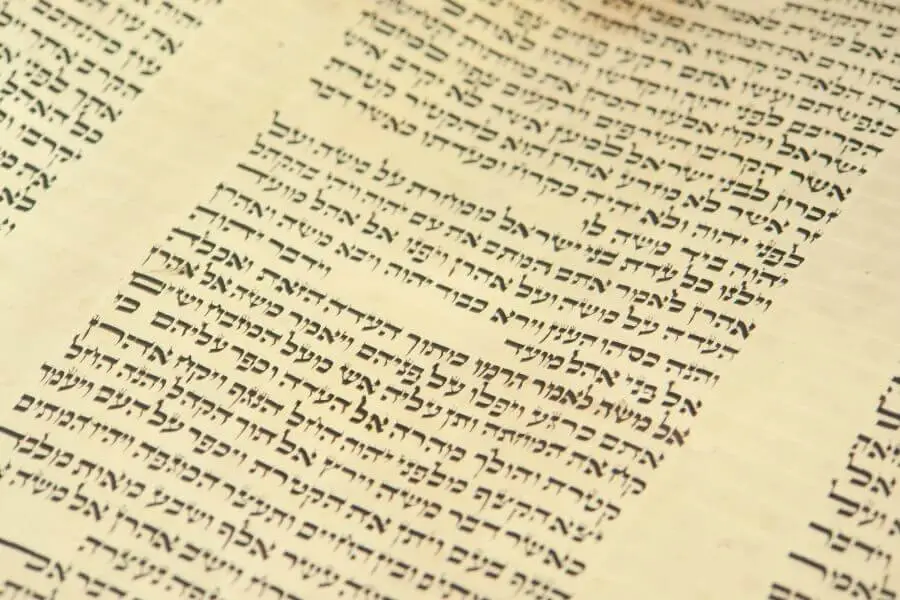
By comparing the two main families of Greek and Hebrew (with the occasional look at the Samaritan Pentateuch, Aramaic Targums, and ancient writers who quote the Bible), we can arrive at what is probably the original text. https://2001translation.org/about/septuagint-vs-masoretic
https://www.thetextofthegospels.com/2017/03/ten-reasons-why-sinaiticus-was-not-made.html?m=1
REVIEW Why are the Apocrypha in the Septuagint? By James M. Rochford A REVIEW OF EACH BOOK https://www.evidenceunseen.com/world-religions/roman-catholicism/the-apocrypha/why-are-the-apocrypha-in-the-septuagint/
The presence of the Apocrypha in the Septuagint (i.e. the Greek translation of the OT) does not support their inspiration for a number of reasons:
First, the Septuagint was translated before the Apocrypha were even written. The Septuagint was translated between 250-132 BC, but the Apocrypha date from 180 to 100 BC! Thus Apocrypha scholar David deSilva writes, “The ‘Septuagint’ codices mentioned above cannot be used as evidence for an Alexandrian Jewish canon that included the Apocrypha.’ These manuscripts are fourth and fifth-century Christian works, fail to agree on the extent tent of the extra books, and seem to have been compiled more with convenience of reference in mind than as the standards of canonical versus noncanonical books (the fact that one even contained, at one point, Psalms of Solomon strongly suggests this). As ‘church books,’ they may have sought to contain what was useful rather than what was strictly canonical. These manuscripts do bear witness, however, to usage in the church in the fourth century (differing from one region to another or even within a single region). The fact that the books of the Apocrypha are interspersed among the (other) Old Testament books also suggests that the communities that produced these manuscripts did not share a consciousness of a closed Old Testament canon corresponding to the rabbinic canon. With these considerations in mind, we can begin to sort out the history of the use and status of the Apocrypha books in the early synagogue and early church.”[1]
Second, the complete Apocrypha are not found in any of the various codices that contain the Septuagint. Scholar D.A. Carson writes, “Although the LXX translations were undertaken before Christ, the LXX evidence that has come down to us is both late and mixed. An important early manuscript like Codex Vaticanus (4th cent.) includes all the Apocrypha except 1 and 2 Maccabees; Codex Sinaiticus (4th cent.) has Tobit, Judith, 1 and 2 Maccabees, Wisdom, and Ecclesiasticus; another, Codex Alexandrinus (5th cent.) boasts all the apocryphal books plus 3 and 4 Maccabees and the Psalms of Solomon. In other words, there is no evidence here for a well-delineated set of additional canonical books.”[2]
[1] David A. deSilva, Introducing the Apocrypha (Grand Rapids, MI: Baker Academic, 2002), Kindle Location 313.
[2] D.A. Carson, “The Apocryphal/Deuterocanonical Books: An Evangelical View.” in The Parallel Apocrypha (Edited by John R. Kohlenberger III. New York: Oxford University Press, 1997), xliv-xlvii.
Sharing is caringFacebookX / TwitterLinkedInWhatsAppTelegramRedditEmail2353 words · 163 views