

¿Qué dice la investigación? El estudio, que fue publicado en la revista médica Gastroenterology, que recoge temas sobre enfermedades intestinales, analizó datos de miles de personas viviendo en Reino Unido, Estados Unidos y Países Bajos. A los participantes -todos ellos gemelos involucrados en programas de investigación médica- se les preguntó sobre su dieta y sobre el tipo de alcohol que suelen consumir. Y los científicos observaron que la flora intestinal de los bebedores de vino tintoes más diversa que la de los no bebedores. La diversidad de las bacterias intestinales aumenta según la cantidad de vino tinto que consume una persona, aunque beber ocasionalmente un vaso por semana o quincena parece ser suficiente, según la investigación. Ninguno de los participantes es un gran bebedor, señalan. https://www.bbc.com/mundo/noticias-49497266
TheAramaicScriptures features The Holy Aramaic Scriptures, as preserved in the ancient Eastern Aramaic Text of The New Testament, in manuscripts such as The Yonan Codex, The Khabouris Codex, The 1199 Houghton Codex, and The Mingana 148 Codex, for you to read and study; giving as literal as possible a rendering of this Holy Biblical Text, in a fresh, accurate, and literal, English Translation.
ܛܝܒܘܬܐ ܥܡܟܘܢ ܘܫܠܡܐ ܡܢ ܐܠܗܐ ܐܒܘܢ ܘܡܢ ܡܪܢ ܝܫܘܥ ܡܫܝܚܐ
Taybutha {Grace} be with you, and Shlama {Peace}, from Alaha Abun {God, Our Father}, and from Maran Eshu Meshikha {Our Lord Yeshua, The Anointed One}
Click here for needed Fonts to view the Aramaic script font
The Aramaic Text used to translate here at TheAramaicScriptures.com, is from Eastern Aramaic Manuscripts, such as The Khabouris Manuscript
A number of Eastern Peshitta Manuscripts have been examined for this translation, as well as the BFBS/UBS Text of the 1905/1920 Aramaic New Testament, which is said to be a Critical Text of about 70 to 80 Aramaic Manuscripts, consisting of both the Eastern and Western versions, and also the Aramaic Manuscripts housed in the British Museum, numbered 14,470, 14,453, 14,473, and 14,475.
The manuscripts consulted for the actual translation are various, like the Goodspeed MS 716, manuscripts no.17 & no.54 from Saint Catherine’s Monastery, The Yonan Codex, the Paris Syr. 342 Codex, the Vat.510 manuscript, and The Khabouris Codex, the Houghton Codex, and the 1261 A.D. Syr. 9 Codex manuscript, and lastly the Mingana Codex which is known as “The Textus Receptus” of The Eastern Aramaic New Testament, these all were carefully compared when a scribal mistake in one of the manuscripts was made, while making certain that all the Original Eastern readings were present in this English translation, as preserved by The Holy Apostolic Catholic Church of the East since the time of the Apostles.
The Aramaic Language is-could be an older sister language of The Hebrew, a Semitic Language of The Middle Eastern region of the world, which it is very close to in its construction, alphabet, and vocabulary.
The Yonan Codex, part of the the Van Kampen Collection on display at the Holy Land Experience, Orlando Florida, is the oldest complete eastern Aramaic Peshitta New Testament. It has been variously dated from the fifth to the seventh century.
Similarly, the Tel Dan Stele, dated approximately 810 BCE, is written in Old Aramaic, dating from a period when Dan had already fallen into the orbit of Damascus.
In some Qumran documents, the tetragrammaton name of the Israelite deity, YHWH, is written in Paleo-Hebrew while the rest of the text is rendered in the adopted Aramaic square script that became today’s normative Jewish Hebrew script.[24]
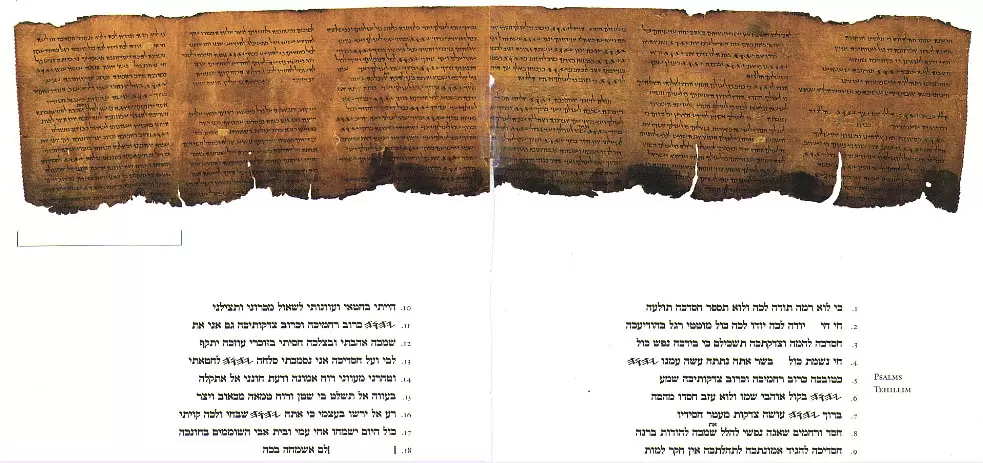
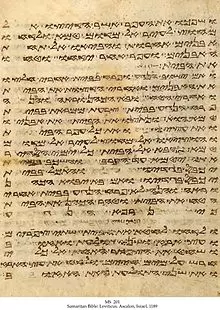
The paleo-Hebrew alphabet continued to be used by the Samaritans and over time developed into the Samaritan alphabet. The Samaritans have continued to use the script for writing both Hebrew and Aramaic texts until the present day. A comparison of the earliest Samaritan inscriptions and the medieval and modern Samaritan manuscripts clearly indicates that the Samaritan script is a static script which was used mainly as a book hand.
En algún momento en los últimos dos siglos a. C. el alfabeto samaritano comenzó a apartarse del judío. A diferencia de los judíos, los samaritanos han continuado utilizando esta escritura para la escritura de ambos textos hebreos y arameos hasta el día presente. Una comparación de las inscripciones samaritanas más antiguas, las medievales y los manuscritos modernos claramente indican que la escritura samaritana es una escritura estática que se utilizó principalmente para libros.
Sefer haYashar (ספר הישר) is a medieval Hebrewmidrash, also known as the Toledot Adam and Divrei haYamim heArukh. The Hebrew title “Sefer haYashar” might be translated as the “Book of the Correct Record”,[citation needed] but it is known in English translation mostly as The Book of Jasher following English tradition. Its author is unknown.
Scholars have proposed various dates between the 9th and 16th century for its composition.
The earliest extant version of this Hebrew midrash was printed in Venice in 1625, and the introduction refers to an earlier 1552 edition in Naples, of which neither trace nor other mention has been found.
The book covers biblical history from the creation of Adam and Eve until a summary of the initial Israelite conquest of Canaan in the beginning of the book of Judges.
Shlomo Yitzchaki (Hebrew: רבי שלמה יצחקי; Latin: Salomon Isaacides; French: Salomon de Troyes, 22 February 1040 – 13 July 1105), generally known by the acronym Rashi, was a medieval French rabbi, the author of comprehensive commentaries on the Talmud and Hebrew Bible.
James 4:5
There are a number of theories regarding what James was referring to. From Precept Austin:
Ideas include (1) James quoted from some unknown apocryphal work (2) The quote is an unrecorded statement of James’ half brother Jesus. (3) James quotes from some NT passage. (4) James was paraphrasing an OT passage. (5) James was not quoting a specific single passage, but is summarizing truths found in several OT passages. (6) Finally, some commentators (and Bible translations) do not treat the first half of verse 5 as a “formula” introducing a quotation but as a sentence which stands by itself. Several of the translations emphasize this latter view by dividing verse 5 into two separate sentences…
- Or think ye that the scripture speaketh in vain? Doth the spirit which he made to dwell in us long unto envying? (ASV)
- Think ye that the scripture speaks in vain? Does the Spirit which has taken his abode in us desire enviously? (Darby)
- Do you think what the scriptures have to say about this is a mere formality? Or do you imagine that this spirit of passionate jealousy is the Spirit he has caused to live in us? (Phillips)
- Or think ye that, in vain, the scripture speaketh? Is it, for envying, that the spirit which hath taken an abode within us doth crave? (Rotherdam)
I have always understood James as referring to the “jealousy” of God as brought forward in many OT passages. For example;
Exodus 34:14 (RSV) 14 (for you shall worship no other god, for the LORD, whose name is Jealous, is a jealous God),
Deuteronomy 4:24 (RSV) 24 For the LORD your God is a devouring fire, a jealous God.
Deuteronomy 6:15 (RSV) 15 for the LORD your God in the midst of you is a jealous God; lest the anger of the LORD your God be kindled against you, and he destroy you from off the face of the earth.
Joshua 24:19 (RSV) 19 But Joshua said to the people, “You cannot serve the LORD; for he is a holy God; he is a jealous God; he will not forgive your transgressions or your sins.
Ezekiel 39:25 (RSV) 25 “Therefore thus says the Lord GOD: Now I will restore the fortunes of Jacob, and have mercy upon the whole house of Israel; and I will be jealous for my holy name.
Joel 2:18 (RSV) 18 Then the LORD became jealous for his land, and had pity on his people.
Nahum 1:2 (RSV) 2 The LORD is a jealous God and avenging, the LORD is avenging and wrathful; the LORD takes vengeance on his adversaries and keeps wrath for his enemies.
Zephaniah 1:18 (RSV) 18 Neither their silver nor their gold shall be able to deliver them on the day of the wrath of the LORD. In the fire of his jealous wrath, all the earth shall be consumed; for a full, yea, sudden end he will make of all the inhabitants of the earth.
Zechariah 1:14 (RSV) 14 So the angel who talked with me said to me, `Cry out, Thus says the LORD of hosts: I am exceedingly jealous for Jerusalem and for Zion.
When coupled with the verses about God putting His Spirit in His chosen/elect.
Isaiah 42:1 (RSV) 1 Behold my servant, whom I uphold, my chosen, in whom my soul delights; I have put my Spirit upon him, he will bring forth justice to the nations.
Isaiah 44:3 (RSV) 3 For I will pour water on the thirsty land, and streams on the dry ground; I will pour my Spirit upon your descendants, and my blessing on your offspring.
Isaiah 59:21 (RSV) 21 “And as for me, this is my covenant with them, says the LORD: my spirit which is upon you, and my words which I have put in your mouth, shall not depart out of your mouth, or out of the mouth of your children, or out of the mouth of your children’s children, says the LORD, from this time forth and for evermore.”
Ezekiel 36:27 (RSV) 27 And I will put my spirit within you, and cause you to walk in my statutes and be careful to observe my ordinances.
Ezekiel 37:14 (RSV) 14 And I will put my Spirit within you, and you shall live, and I will place you in your own land; then you shall know that I, the LORD, have spoken, and I have done it, says the LORD.”
Ezekiel 39:29 (RSV) 29 and I will not hide my face any more from them, when I pour out my Spirit upon the house of Israel, says the Lord GOD.”
Joel 2:28 (RSV) 28 “And it shall come to pass afterward, that I will pour out my spirit on all flesh; your sons and your daughters shall prophesy, your old men shall dream dreams, and your young men shall see visions.
Joel 2:29 (RSV) 29 Even upon the menservants and maidservants in those days, I will pour out my spirit.
Haggai 2:5 (RSV) 5 according to the promise that I made you when you came out of Egypt. My Spirit abides among you; fear not.
Zechariah 4:6 (RSV) 6 Then he said to me, “This is the word of the LORD to Zerub’babel: Not by might, nor by power, but by my Spirit, says the LORD of hosts.
Acts 2:17 (RSV) 17 `And in the last days it shall be, God declares, that I will pour out my Spirit upon all flesh, and your sons and your daughters shall prophesy, and your young men shall see visions, and your old men shall dream dreams;
Acts 2:18 (RSV) 18 yea, and on my menservants and my maidservants in those days I will pour out my Spirit; and they shall prophesy.
Deuterocanonical
I think that the strongest candidate is Wisdom 6:23, in the Deuterocanonical books of the Greek Septuagint. I explain my reasoning below.
The ESV editors chose to translate the Greek as you indicate,
He yearns jealously over the spirit that he has made to dwell in us
where they interpreted the Greek,
Ἢ δοκεῖτε ὅτι κενῶς ἡ γραφὴ λέγει; Πρὸς φθόνον ἐπιποθεῖ τὸ πνεῦμα ὃ κατῴκησεν ἐν ἡμῖν.
as, after arranging the proper order:
He yearns — ἐπιποθεῖ, lit. “longs for”, “He” understood
Jealously — Πρὸς φθόνον, lit. “With envy”
[over] the spirit — τὸ πνεῦμα
that he has made to dwell — ὃ κατῴκησεν, lit. “that which took up abode”
in us — ἐν ἡμῖν.
The western Church Father (Venerable) Bede maintains that this is not the correct rendering. He states that the second clause must be read as a question in itself:
Does the spirit that dwells in you have a desire for envy?
which falls into place simply when πρὸς is understood to mean “for” (one of its accepted translations) instead of “with” and understanding the clause to be a question (the original manuscripts were not punctuated).
This does not make finding the verse in the Old Testament much easier to find (Bede and other Fathers said it simply isn’t to be found), but it would negate some of the interpretations suggested that say the verse is referring to the jealousy of God. Bede writes:
This must be read as a question of rebuke, as if it said, ‘Does the spirit of grace with which you were signed on the day of your redemption desire this, that you envy one another? Certainly it is not the good, but the wicked spirit that brings about in you the vice of envy.’ This is similar to the manner of speaking in the Psalm [49:7 LXX], A brother will not redeem, will a man redeem? For it is understood thus, ‘If Christ, who deigned to become a brother to us through his humanity, did not redeem us, is some mere man in a position to redeem us?’ Certain people have explained this thought, Does the spirit that dwells in you have a desire for envy? thus: ‘He has a desire against envy, that is, he desires that the disease be overcome and rooted out of your minds.’ Others understand it as said of the spirit of man, so that the sense would be, ‘Do not have desires, do not cling to the friendships of the world, because while the spirit of your mind desires earthly things, it certainly desires to envy, while you envy others having those things which you yourselves desire to possess.’
As I said, Bede’s interpretation and commentary don’t reveal which Old Testament Scripture is being referred to. I did notice, however, that the Greek word φθόνος (“envy”, “jealousy”) only appears in the Septuagint’s Deuterocanonical books: 1 and 3 Maccabees and the Wisdom of Solomon. Only Wisdom 6:23 seems to be related:
Wisdom of Solomon 6:23 (Brenton LXX)
Neither will I go with consuming envy; for such a man shall have no fellowship with Wisdom.
If we take the reference in James 4:5 as a paraphrase rather than an exact quote, this passage seems to fit, but I would certainly be interested in opinions https://christianity.stackexchange.com/questions/3033/what-scripture-is-james-45-referring-to
REVIEW Daniel prophecies excluding 9 are Maccabees
The book has the most classical Greek language of all the books in the Septuagint. It also had much of the Hebrew style that had existed when the book was written. The writer also must have been deeply involved in the philosophical, religious, and ethical writings in Hellenistic Alexandria.
El autor de este libro ha sido un convencido israelita piadoso, profundo conocedor de los textos sagrados, la historia y las costumbres propios de su pueblo.[11] Reproduce de forma muy fiel y minuciosa los usos y costumbres propios de la liturgia de los cultos paganos de la cultura egipcia, a los cuales reprueba y considera no actos religiosos, sino tan sólo prácticas idolátricas supersticiosas.[12]
[11] Escuela Bíblica de Jerusalén, Biblia de Jerusalén, Introducción al Libro de la Sabiduría.
[12] (Cfr. Sabiduría 13:10-19, 14:1.31.)
El autor de este libro utilizó como fuentes para sus convicciones los textos de la Biblia griega de los LXX. Y, si bien no lo afirma de una manera expresa, parece sugerir en algunos pasajes que los alejandrinos se encontraban —en el momento en que él escribe— llevando a cabo alguna forma de campaña de discriminación contra los israelitas. De forma tal que no sugiere una acción de genocidio, o de limpieza étnica, sino más bien algunas expresiones sutiles de animadversión o de desprecio, que pudieron haber estado en boga durante aquellos tiempos.
De lo anterior se desprende que, si el autor era alejandrino, la fecha del manuscrito no puede remontarse a ninguna fecha anterior a la fundación de la ciudad por el conquistador Alejandro Magno, en 330 a. C.
An early manuscript called the Muratorian fragment notes the book was written by “the friends of Solomon in his honor.”
Los manuscritos más antiguos de las Odas de Salomón que se conservan datan de finales del siglo III y principios del IV. La Pístis Sophía escrita en copto, incluye una cita en un verso en latín de Firmiano Lactancio salido de la Oda 19, también es mencionada la Oda 11 en el texto griego del Papiro Bodmer XI descubierto en 1952.
The Book of Sirach (/ˈsaɪræk/)[a] or Ecclesiasticus (/ɪˌkliːziˈæstɪkəs/; abbreviated Ecclus.)[3] is a Jewish work, originally written in Hebrew. It consists of ethical teachings, from approximately 200 to 175 BCE, written by the Judahite scribe Ben Sira of Jerusalem, on the inspiration of his father Joshua son of Sirach. Joshua is sometimes called Jesus son of Sirach or Yeshua ben Eliezer ben Sira.
[a]Hebrew: ספר בן-סירא, romanized: Sēper ben-Sîrāʾ; also The Wisdom of Jesus the Son of Sirach,[1]The Wisdom of Sirach, or simply Ben Sira[2] or Sirach.
- “Sirach, The Wisdom of Jesus the Son of”. Jewish Encyclopedia. 1906. Retrieved 22 January 2022.
- ^ “Book of Ben Sira”. BibleStudyTools.com. Salem Communications Corporation. Retrieved 2013-10-25.
- ^ Gigot, Francis (1909), Ecclesiasticus. The Catholic Encyclopedia. Vol. 5. New York: Robert Appleton Company.
Wisdom of Solomon 1:1–6:21, often referred to as the “Book of Eschatology,” presents a comparison between the wicked and the righteous starting in chapter two.5 The foolish in this chapter have a pessimistic view of existence and do not believe in the afterlife. They live indulgently, partaking of worldly pleasures, and persecute the righteous. In Wis 2:2, they say: “for we were born by mere chance, and hereafter we shall be as though we had never been.” https://journals.sagepub.com/doi/full/10.1177/09518207211033522 5. A number of recent studies argue for the unity of Wisdom of Solomon; see Luca Mazzinghi, Wisdom, IECOT (Stuttgart: Kohlhammer, 2019), 19–20.
Sharing is caringFacebookX / TwitterLinkedInWhatsAppTelegramRedditEmail3381 words · 170 views