No matemática quimica
The large intestine has 3 primary functions: absorbing water and electrolytes, producing and absorbing vitamins, and forming and propelling feces toward the rectum for elimination.
.
casta gourmet orégano, quinua en grano doria, arroz integral roa, maní con pasas koba Colombia d1 nuthos, ciruelas deshidratadas sobretodo de potasio, almendra tostada 40% menos sodio sal taeqcolombia, linaza x60 gramos vive natural, perejil casta gourmet, orégano saysa lasagna, pizza, pastas, carnes, pescado, aves y crema de tomate, ajonjolí tostado doña betty, albahaca cg, almendras tosh, granola tradicional carolina ingredientes hojuela de cebada, de maíz, cereal arroz blanco, cereal arroz panela, maní tostado, uvas pasas, miel de caña, melaza de caña, sal contiene alérgicos (cebada, maíz, gluten) trazas de centeno, soya, frutos secos nsa-0009724-2021. Coco deshidratado doña betty, almendra tostada, aceite de maíz cerealesselecta, tome maíz japonés, arena de trigo fortificada, azúcar almidón de maíz, Proteína vegetal hidrolizada, sal marina, leudante (bicarbonato de sodio) y antioxidantes bha( e-320 butilhidroxianisol) y bht (e-321 butilhidroxitoluol) contiene trigo gluten.
Ciruela pasa sin semilla el nogal, almendras al natural olímpica, uvas pasas emilu trazas de gluten, leche, huevo, soya, maní, nueces de árbol y almendras. Arándanos deshidratados, azúcar y aceite vegetal koba Colombia, pistacho tostado con cáscara y sal koba Colombia atención.cliente@koba-group.com nit 900.276.962-1 almendras del Alba sa vía palmira candelaria kilómetro 3 bolo alizal valle del cauca colombia
Helicobacter Pylori: tratamiento complementario
El arándano rojo americano, ya que impide la adhesión de la bacteria a la mucosa digestiva y a las paredes intestinales. Puede ser ingerido en forma de zumos concentrados en ayunas, al natural como una fruta hidratada por ejemplo en un yogur natural o bien en cápsulas estandarizadas.
El hinojo o la melisa en infusión o en extracto líquido disminuye los dolores cólicos, así como los gases, y además aumenta la producción de jugos gástricos tomado después de las comidas principales mejorando la digestión. Ya que estas personas suelen tener problemas de dispepsia a causa de la colonización bacteriana negativa.
El lactobacillus gg es otra cepa de probióticos a tener en cuenta ya que potencia la acción del resto de los suplementos aplicados.
Se recomienda probioticos de esporas o no hacerlo a quien tenga flora intestinal aumentada debido a que podria incrementar sintomas
El regaliz contiene glicirricina, un compuesto que tiene propiedades inmunoestimulantes con un elevado efecto antiséptico tanto sobre bacterias como sobre virus y además es el mejor complemento en casos de gastritis o úlcera gastro-duodenal.
Garlic, ajo entre otros.
Es importante entender que en algunas personas, algunos alimentos tienen efectos secundarios. Por tal motivo es importante saber de ellos y en base a la experiencia sin exceder la dosis recomendada usar el que menos efectos secundarios le genera
Como tratamiento de base general sería correcto suplementar con un complejo inmunoregulador completo que contenga un conjunto de sustancias naturales responsables del aumento de las defensas, como por ejemplo: echinacea, pau de arco, propoleo, lactoferrina, vitaminas A y C, selenio, astrágalo, andrographis, uña de gato, jengibre, canela, eleuterococo, hongos como el maitake o el shiitake, calostro, etc.
Echinacea
Echinacea Chicoric acid has an extensive history of effective use in both internal and external bacterial infec-tions. The native North-Americans and later the eclectic US-herbalists used extracts from this plant long before the availability of modern antibiotics. Recent studies evaluated the direct antibacterial effects of the well-known echinacea fresh plant extract Echinaforce® [3]. The bacterici-dal (bacteria killing) effect was tested with sever-al bacterial pathogens, which are important for acute respiratory tract infections and exacerba-tion. The results confirmed the traditional and empiric knowledge: Echinacea in fact has bactericidal effects on important pathogenic bacteria like Streptococcus pyogenes, Haemophilus influenzae or Legionella pneumophila. These microbes were completely deactivated by echinacea (by 99.90–99.99%) in low concentrations (<160 μg/ml dry mass). Other bacteria like Staphylococcus aureus needed higher extract dilutions for the bactericidal effect.
Antibacterial effects of
Echinaforce® ;
In the many cases of bacterial superinfection of originally viral respiratory tract infections (the so called “bacterial exacerbation”), this antibacterial effect of echinacea can improve considerably the therapeutic management. Thus Echinaforce® might deliver a preventive effect against the
development of pneumonia, sinusitis or bronchi-tis.
S. pyogenes es responsable de un amplio abanico de infecciones más o menos graves que, por orden de frecuencia, son: faringitis, infecciones cutáneas (impétigo y erisipela) y de tejidos blandos, sepsis puerperal, neumonía, endocarditis, meningitis y artritis. Streptococcus pyogenes RESISTENTE A LOS MACRÓLIDOS
Haemophilus influenzae Bacteria Haemophilus influenzae is a Gram-negative, coccobacillary, facultatively anaerobic capnophilic pathogenic bacterium of the family Pasteurellaceae. H. influenzae was first described in 1892 by Richard Pfeiffer during an influenza pandemic.
Legionella pneumophila Bacteria Legionella pneumophila es una bacteria pleomórfica, flagelada y Gram negativa del género Legionella. L. pneumophila es el patógeno primario humano en este grupo y causante de la legionelosis o enfermedad del legionario.
Las personas que se enferman después de la exposición a las bacterias Legionella pueden presentar dos enfermedades diferentes, que en conjunto se conocen como legionelosis: enfermedad del legionario y fiebre de Pontiac. Legionella | Signos y síntomas de la enfermedad del legionario | CDC
Positive effect on the immune System, May lower blood sugar levels, May reduce feelings of anxiety, Anti-inflammatory properties In a mouse study, echinacea compounds helped reduce important inflammatory markers and memory-loss (alzheimer) caused by inflammation (20Trusted Source). These results demonstrated that CA alleviated memory impairment and amyloidogenesis triggered by LPS through suppressing NF-κB transcriptional pathway, suggesting that CA might be a plausible therapeutic intervention for neuroinflammation-related diseases such as Alzheimer disease.-Liu, Q., Chen, Y., Shen, C., Xiao, Y., Wang, Y., Liu, Z., Liu, X. Chicoric acid supplementation prevents systemic inflammation-induced memory impairment and amyloidogenesis via inhibition of NF-κB.
In another study in 10 healthy people aged 25–40, skin care products containing echinacea extract were found to improve skin hydration and reduce wrinkles (23Trusted Source). Test-tube studies have shown that echinacea extracts may suppress cancer cell growth and even trigger cancer cell death (25Trusted Source, 26Trusted Source).
Health Benefits of Ginseng Some test-tube studies have shown that ginseng extracts and ginsenoside compounds could inhibit inflammation and increase antioxidant capacity in cells (5Trusted Source, 6Trusted Source). For example, one test-tube study found that Korean red ginseng extract reduced inflammation and improved antioxidant activity is skin cells from people with eczema (7Trusted Source). May Benefit Brain Function, May Boost the Immune System, May Have Potential Benefits Against Cancer, May Fight Tiredness and Increase Energy Levels, Could Lower Blood Sugar
Echinacea Side Effect: Gut Changes Change in Balance of Bacteria in Gut May Be Echinacea Side Effect By Daniel J. DeNoon Medically Reviewed by Louise Chang, MD on December 20, 2006
They found significant changes in the balance of normal gut bacteria — including an increase on bacteroides.
Las bacteroides juegan un papel clave en ayudarnos a digerir los componentes vegetales y de grano integral de una dieta magra y baja en grasas. Como no descomponen bien las grasas, las Bacteroides se encuentran más en personas que siguen dietas bajas en grasas.
Horsetail
If the herb has a diuretic effect, it might cause your body to flush out essential nutrients, such as potassium. Horsetail also has an enzyme that destroys thiamine, or vitamin B-1. If taken for a long time, it could raise your risk of thiamine deficiency.
Gut Microbiota: Therapeutic Targets of Ginseng Against Multiple Disorders and Ginsenoside Transformation
Zhaoqiang Chen, 1 , † Zepeng Zhang, 2 , 3 , † Jiaqi Liu, 1 Hongyu Qi, 1 Jing Li, 1 Jinjin Chen, 1 Qingxia Huang, 1 , 2 Qing Liu, 1 Jia Mi, 4 , * and Xiangyan Li 1 , *
In our review, we summarized the findings of many studies, which showed that ginseng can play a role in the prevention and treatment of obesity, diabetes, fatty liver, colitis, diarrhea, cancer, and other diseases by regulating the host microbiota. At the same time, microbiota is also the key medium of ginsenoside transformation in vivo. The pharmacological functions of ginseng against various diseases might be related with the abundance and the structure of gut microbiota, including increase the relative abundance of probiotics (Bacteroides, Lactobacillus, Bifidobacterium, Akkermansia) and reduce the relative abundance of pathogenic bacteria (Firmicutes, Helicobacter, Clostridium Proteobacteria). Ginsenosides could be transformed into CK, PPD or PPT for better activities under the actions of probiotics, including Bacteroides, Eubacterium, Bifidobacterium, and Fusobacterium. Therefore, we can use probiotics combined with ginseng to improve the pharmacodynamic value of ginseng to fully play its pharmacological effect in future.
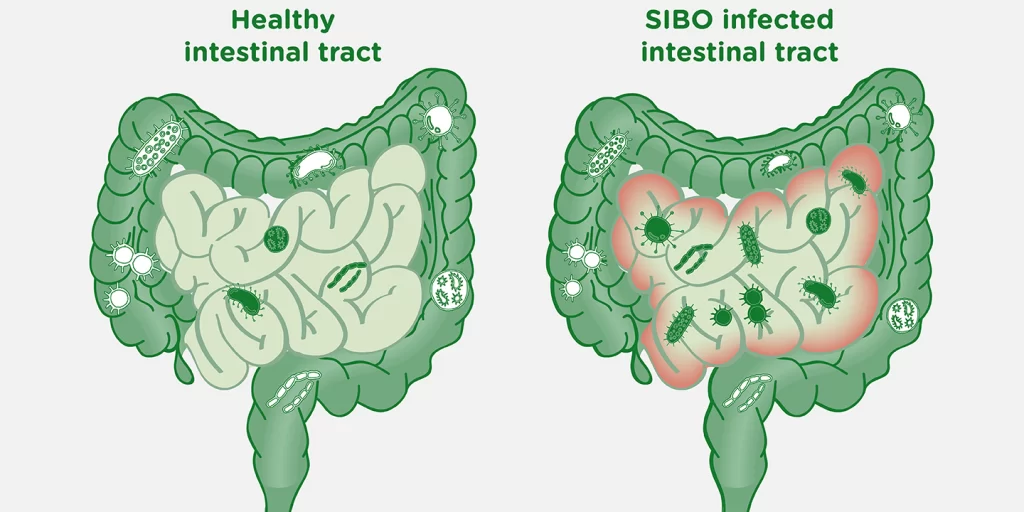
Treatment of Small Intestinal Bacterial Overgrowth with Botanical Therapies Equivalent to Rifaximin By Carrie Decker, ND Founder and Medical Director, Blessed Thistle, Madison, WI August 1, 2015
| Herbs in Commercially Available Products | |||
| FC Cidal | Dysbiocide | Candibactin-AR | Candibactin-BR |
| Amrita (Tinospora cordifolia) Horsetail (Equisetum arvense) Pau D’Arco (Tabebuia avellanedae) Thyme (Thymus vulgaris) Tarragon (Artemisia dracunculus) Bala (Sida cordifolia) Olive leaf (Olea europaea) | Dill seedStemona sessilifolia Wormwood (Artemisia absinthium) Pulsatilla (Pulsatilla chinensis)Brucea javanica Quassia (Picrasma excelsa) Catechu (Acacia catechu) Damiana (Hedyotis diffusa) Yarrow (Achillea millefolium) | Thyme (Thymus vulgaris) Oregano (Origanum vulgare) Sage (Salvia officinalis) Lemon balm (Melissa officinalis) | Coptis root (Coptis chinensis) Indian barberry (Berberis aristata)Berberine sulfate Chinese skullcap (Scutellaria baicalensis) Philodendron bark (Phellodendron chinense) Ginger (Zingiber officinale) Chinese licorice (Glycyrrhiza uralensis) Chinese rhubarb (Rheum officinale) |
SIBO: Dysbiosis Has A New Name by Steven Sandberg-Lewis
Antibiotics, such as rifaximin, are most commonly used to treat overgrowth with varying success, (1)(3) however, long-term or frequent use of antibiotics can be costly and may induce adverse effects on the intestinal microbiome. It has been suggested that herbal antimicrobials may be an effective treatment option for bacterial overgrowth. A number of herbs have demonstrated antimicrobial activity, such as oil of oregano, wormwood Artemisia absinthium, Coptis root, thyme Tomillo, red thyme, field horsetail Cola de caballo, olive leaf hoja de olivo, and berberine extracts. (3)
La berberina es una sustancia química que se encuentra en algunas plantas como el agracejo europeo, el sello de oro, el hilo de oro, la uva de Oregón, el filodendro y la cúrcuma de árbol. La berberina es una sustancia química amarga y de color amarillo.
Evid Based Complement Alternat Med. 2021; 2021: 9961089.
Published online 2021 Jul 22. doi: 10.1155/2021/9961089
PMCID: PMC8324356
PMID: 34335850
New Evidence for Artemisia absinthium L. Application in Gastrointestinal Ailments: Ethnopharmacology, Antimicrobial Capacity, Cytotoxicity, and Phenolic Profile
Marija Ivanov,Uroš Gašić,Dejan Stojković,Marina Kostić,Danijela Mišić, and Marina Soković
Artemisia absinthium L. wide usage as a traditional remedy for GI diseases might be based on the ability of the herb to reduce the growth of microorganisms whose presence is linked to GI discomfort. This antimicrobial potential could be attributed to the broad spectrum of bioactive phenolic compounds present in the herb ethanol extract since for some of them identical mechanism of antimicrobial activity and wide antimicrobial spectrum has been determined previously.
Focus on prevention of sibo recurrence
Prevention of recurrence is essential as relapse rates following SIBO treatment are high. In one study, the recurrence of SIBO following successful rifaximin treatment was found to be 44%. (2) Correcting underlying conditions and minimizing risk factors related to SIBO can help prevent recurrence. (7) Additionally, a number of protective factors that may reduce the risk of developing SIBO have been identified, including:
- Augmentation of the migrating motor complex (MMC)
- Biofilm disruption
- Gastric acid, pancreatic enzyme, and bile acid supplementation
- Intestinal motility training
- Sufficient secretory immunoglobulin A (3)
READ gram-positive cocci natural treatment echinacea sibo ginseng e pylori gram-positive cocci where found horsetail what bacteria kills
REVIEW no todos los medicamentos sirven a todos por igual. Se debe de estudiar la condicion de cada uno para saber que medicamento tendria menor efecto secundario
REVIEW rifaximin can disrupt the gastrointestinal microbiota
Sharing is caring
Share
+1
Tweet
Share
Share